The Framework
Supply Chain of Intelligence™
SCoI, the 10 layers of the generative AI stack
One page. Seven questions. The canonical reference — and the reasoning protocol to run it.
The Definition
What is it?
Intelligence is a supply chain.
A deeper, fuller view — beyond the older stack and value chain lenses
The AI stack and the AI value chain are older, partial ways of seeing AI — each shows one slice and misses the rest. The Supply Chain of Intelligence is the deeper, fuller view of the same system: it surfaces what those older lenses structurally cannot — gatekeeping, absorption risk, currents, flywheels, vertical adjacency, and timing — so strategy can be reasoned about at the level where value is actually won or lost.
Why the stack view, and the value chain view, are not enough
A stack shows the parts. A value chain shows the flow. Only a supply chain of intelligence shows gatekeeping, bottlenecks, currents, flywheels, and absorption — the forces that decide who actually keeps the value.
Seven things that go missing
- Gatekeeping — who controls each chokepoint, and what they can charge to let traffic through. Neither a stack nor a value chain has a concept for this.
- Bottlenecks above and below the visible layers — L−1 resources, L3 verification, L8 memory. Stack diagrams crop them out.
- Currents that move value sideways — capital, demand, attention flow across layers and decide which defensible position becomes a business.
- Flywheels that compound across sublayers — L5 → L1d → L8c is a loop, not a list of components.
- Vertical adjacencies the Intelligence Cube exposes — the same layer behaves differently in Legal vs. Health vs. FinTech.
- Absorption risk a platform poses to every layer beneath it — the stack shows neighbors, not predators.
- Timing — when each layer commoditizes, and what survives the compression.
A stack describes parts. A value chain describes flow. A supply chain of intelligence describes the whole system — gatekeeping, bottlenecks, currents, flywheels, absorption — which is the level at which durable AI strategy can actually be reasoned about.
How it sits next to the AI stack
The AI stack explains how intelligence is built. The Supply Chain of Intelligence explains where intelligence becomes economically defensible.
The Map
Where does value accrue?
A map of where value accrues, not where code runs.
The 10 layers (L−1 Resources → L8 Memory) are the structural vocabulary. They group into three tiers — Substrate, Workflow, Surface — that compound on very different timescales. Three market currents (Demand Gravity, Attention Economics, Capital Flows) flow horizontally across all of them and decide whether a defensible position becomes a business. This is the map an AI stack diagram can't draw.
Before the 10, the 3 tiers
What users touch
Easily replicated. Platforms ship this for free.
What users live inside
Sticky if deep. Survivable if owned.
What users depend on
Proprietary data, trust gates, compounding memory.
Value escapes the surface and accumulates in the layers below. Own the lower layers, or rent them, and rent your future.
The full taxonomy, one image
Supply Chain of Intelligence™
The 10 layers × 50 sublayers of the generative AI stack.
Blank template · SCoAI
Not logistics. The AI stack.
Print it. Mark it up. Map your own, or any company you cover.
SupplyChainOfAI.com
Why we call it a supply chain
From gold in the ground to the ring on your finger
Every layer transforms the output of the layer below it. Most companies only own one layer. The supply chain is only as strong as its weakest link.





 L-1Resources
The Ground Itself, Land, Power, Materials
Before the gold rush, you need land, water rights, ore deposits, and the miners who work the seams. In AI: power generation, cooling water, foundry capacity, rare earths, and the electricians and technicians who physically build the boom. When demand spikes, this layer is the real bottleneck.
Power generation, PPAs, transmission, and the multi-year grid-interconnect queue, the megawatts the stack consumes and the wait to get them switched on
Cooling systems, water access, immersion/liquid cooling, heat reuse, the thermodynamic ceiling on every GPU cluster
Leading-edge chip fabrication capacity, EUV lithography, advanced packaging (CoWoS), the physical floor of L0
Rare earths, lithium, cobalt, gallium, specialty substrates, and the refining, logistics, and geopolitical chokepoints that gate them
Electricians, HVAC techs, data-center builders, fab process engineers, robotics technicians, the labor pool no model can synthesize
L0InfraThe Shovels & Mining Equipment
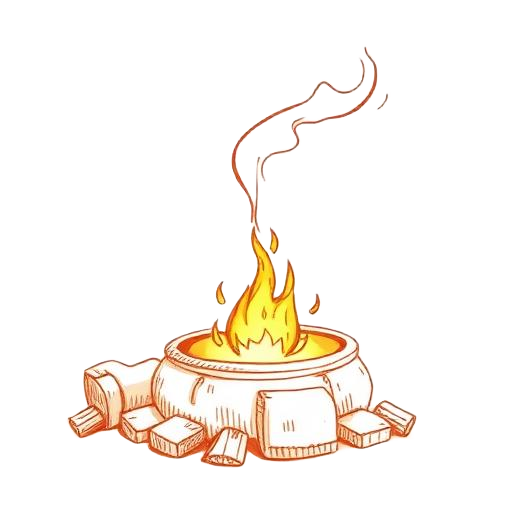
Before anyone finds gold, someone has to build the pickaxes, drill rigs, and mine shafts. In AI: NVIDIA builds the GPUs, CoreWeave builds the data centers, hyperscalers run the clouds. No shovels → no gold rush. Shovel sellers outlast most miners.
GPUs, TPUs, custom AI accelerators, plus HBM and high-bandwidth memory (SK Hynix, Micron, Samsung), the invisible bottleneck behind every chip cycle
Physical facilities housing compute at scale
Networking between chips, racks, regions, clouds
On-demand compute, scheduling, and durable agent state (checkpointing, workflow state, runtime memory stores)
Local inference on phones, vehicles, sensors, endpoints
L1DataThe Raw Gold Ore
The unrefined material pulled from the earth. Some mines have pure veins (proprietary data), others have common dirt (public data). Public data is already mined by everyone. The L1b test: if your data is public, the model layer wins.
Common Crawl, Wikipedia, government data, open datasets
Licensed, paywalled, or internally generated training corpora
Clicks, sessions, interaction logs, and camera, LiDAR, IMU, telemetry, and physical-world sensor streams for robotics and autonomy
Labels, results, conversions, win/loss, audit trails, what actually happened after the model acted
Machine-generated corpora and simulated environments (Isaac Sim, CARLA, Omniverse, world-sim) for training, augmentation, and embodied agent rollout
L2ModelsThe Smelter & Refinery
Raw ore becomes pure gold through smelting. In AI: foundation, specialized, and reasoning models refine raw data into intelligence. Refining is expensive and only a few can do it at scale, but once refined, the gold is a commodity.
Large pre-trained generalists, GPT, Claude, Gemini, Llama, and vision-language-action and video models (Sora, Veo) that span text, image, audio, and motion
Domain-tuned, distilled, and PEFT/LoRA-adapted models for specific verticals or tasks (BloombergGPT, Med-PaLM, Codestral)
Vector representations, search indices, reranking, and RAG infrastructure
Selecting, chaining, ensembling, or mixture-of-experts routing across multiple models per task to balance cost, latency, and quality
Extended chain-of-thought, planning, and multi-step inference, plus predictive world models (V-JEPA, Genie, Sora-as-simulator) that let agents and robots imagine outcomes before acting
L3GatesThe Hallmark & Assay Office
Before gold enters the market, the assay office verifies purity and the hallmark guarantees quality. In AI: compliance, evals, safety, editorial taste, and distribution control are the gates. Without the hallmark, no enterprise, and no app store, lets you in.
Regulatory, legal, and policy filters (HIPAA, GDPR, SOC 2, EU AI Act), plus chip export controls, model sovereignty, and data-residency regimes that decide where the stack is allowed to run
Accuracy, hallucination detection, output grading, eval harnesses, regression suites
Harmful-content filtering, adversarial defense, prompt-injection protection, and content provenance (C2PA, watermarking, deepfake attestation) that proves what was generated and by whom
Tone, brand voice, style, taste, the human judgment layer
App store approval, ranking, marketplace curation, discovery control
L4AccessThe Railroads & Transport
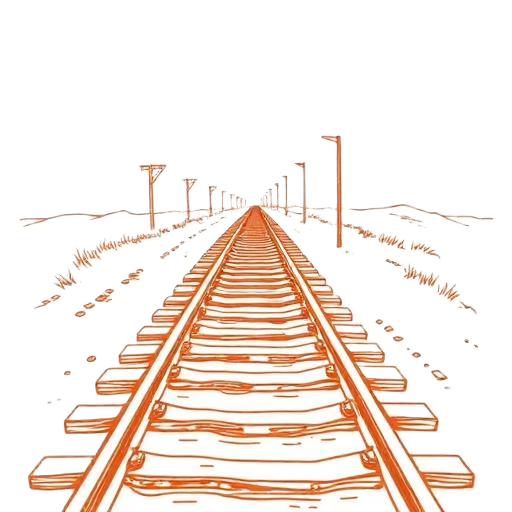
Refined gold needs to move, by rail, armored truck, secure vault. In AI: APIs, MCP, real-time pipes, and agent identity move intelligence between systems. Grammarly survived because it had tracks into every workflow. Jasper had none.
REST/GraphQL endpoints, SDKs, webhooks connecting AI to systems
MCP, tool-use specs, agent-to-agent communication standards
Who can use what, RBAC, scoping, audit trails, and agent-payment rails (Stripe/Visa/Mastercard agent-pay, spend limits, programmatic checkout, machine-to-machine billing)
Streaming, voice pipelines, video, low-latency modality transport
Verifying which agent acted, credential chains, trust signatures
L5ExecutionThe Master Jeweler
A jeweler takes refined gold and crafts rings, necklaces, watches, each requiring specialized skill. In AI: domain skills, decision frameworks, and operating playbooks transform generic intelligence into specific capability. Harvey knows legal. Sierra knows CX.
Doing the actual work, legal drafting, code generation, diagnosis, underwriting, including function calling, code interpreter, browser/computer use, and structured tool invocation that turns a model into an operator
Structured thinking patterns, checklists, rubrics the agent follows
Grounding execution in retrieved context, knowledge, and documents
Company-specific SOPs, rules, preferences encoded for agents
Tone, empathy, negotiation, persuasion, and physical-world actuation (robotic control, valve/vehicle/device operation)
L6OrchestrationThe Jewelry Store & Workshop
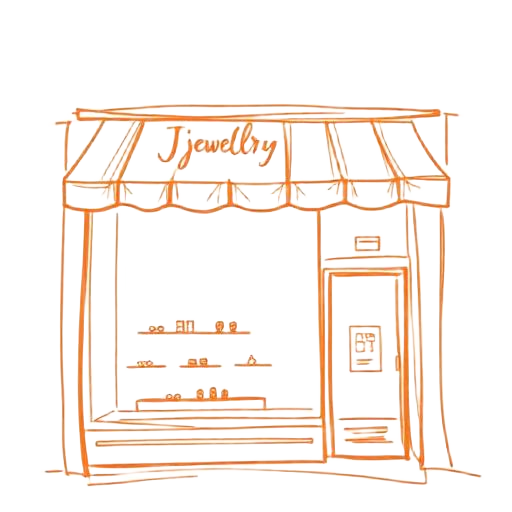
A single ring is useful. A curated collection with fitting and custom design is an experience. In AI: orchestration composes individual skills into multi-step workflows with human override and runtime assurance. One skill → one task. Orchestration → entire workflows.
Single-agent plan-act-observe cycles
Escalation patterns, approval workflows, human override design
Breaking complex work into subtasks and assigning to the right agent
Maintaining working memory, session state, context windows across steps
Post-deployment monitoring, evals, feedback pipelines, drift detection
L7SurfaceWearing the Jewelry, The Moment of Experience
People see the ring on the finger, the surface, the sparkle, the emotional moment. In AI: chat, dashboards, copilots, and ambient agents are the surfaces. Beautiful, but the most exposed layer, unless you're embedded inside the workflow or own the moment of transaction.
Voice and chat interfaces, the talking layer
Dashboards, generated images, video, rich media output
AI woven into existing tools (IDE copilots, email assistants, in-app agents) and embodied in physical hardware (robots, devices, vehicles)
Where the AI closes a deal, books an appointment, processes a payment
Background agents, notifications, proactive nudges, always-on monitoring
L8MemoryThe Record Book, Compounding Knowledge
The jeweler keeps records: which designs sold, which metals each customer prefers. Over time, this memory makes every decision better. In AI: session, entity, network, institutional, and world-model memory compound. The system that remembers wins long-term.
Within-conversation context, scratch state, working memory
Persistent preferences, history, relationship context per user or account
Patterns learned across many users/customers, fleet intelligence
What the organization knows, docs, decisions, tribal knowledge encoded
The system's accumulated causal understanding of how things work
← Key insight: Each layer transforms the output of the layer below it. Land and power (L-1) feed the shovels (L0). Shovels mine the ore (L1). Ore is refined (L2), assayed (L3), transported (L4), crafted (L5), arranged (L6), and worn (L7), and none of it compounds without record-keeping (L8). The supply chain is only as strong as its weakest layer, and most companies only own one.
On the word "agent"
"Agent" is not a layer. It's a costume worn by L5.
Every company shipping "an agent" in 2025 is selling the same structural package: L5 Execution + L6 Orchestration, usually wrapped in an L7 Surface, sometimes with L8 Memory, riding on L4 Access pipes. When you read "we launched an agent," decode it: name L5 + L6 first, then which of L4 / L7 / L8 it bundles.
The Decoder
- Agent + L1b Proprietary Data → fortress. (Sierra, Harvey, Klarna's internal stack.)
- Agent + L4 Distribution → railroad. (Salesforce Agentforce, Microsoft Copilot agents.)
- Agent + L8 Compounding Memory → memory moat. (Glean, Cresta, Decagon.)
- Agent + nothing else → exposed L7 wrapper. Commoditizes the moment the underlying L2 ships the same loop.
The forces acting on the map
Three Currents flow across every layer
The 10 layers describe how intelligence is produced and delivered, the supply side. Three market currents flow horizontally across every layer and decide whether a defensible position actually compounds into a business.
Currents are market forces, not layers. Regulatory and geopolitical constraints live at their native layers (L−1 energy/fabs/materials, L3 compliance and export controls) and are not currents.
Demand Gravity
Where the budget actually sits, and what it pulls toward.
As L2 prices collapse, demand moves toward outcomes (L5+L8), verification (L3), and proprietary data access (L1), not generation itself.
Use it · Name the buyer, the budget line, and what they stop paying for once L2 is free.
Attention Economics
What becomes scarce when generation becomes infinite.
Default placement, OS integration, habit loops, and on-ramp ownership decide who gets used. Apple, Google, Microsoft become L7 landlords charging rent in attention.
Use it · Assume infinite supply. Ask: who owns the on-ramp, what does default placement cost?
Capital Flows
How funding rounds bend the chain they fund.
Tens of billions into L2 created a generation glut; near-zero into L−1 created the energy and fab bottleneck constraining everything above it. Capital overheats the fashionable layer and starves the unglamorous one.
Use it · Read the funding map as a distortion field, not as a value signal.
The Laws
Why does it work?
Four structural laws predict the future.
Not opinions. Structural forces that explain why most AI products get compressed in the layer they were built in, and which counter-moves keep them durable as the platforms move. Each Law is falsifiable: name a counter-example mechanism and the Law has to be amended.
Intelligence Commoditizes Downward
If your product depends only on generic model capability, the platform layer below you will eventually absorb it. Wrappers don't survive, wrappers become features.
Predicts WHO gets absorbed.
Value Accrues at Bottlenecks
Durable value rarely sits in the model or the UI. It sits at the scarce layer, proprietary data, workflow control, verification, distribution, memory, compliance, or trust. Find the bottleneck. Own it.
Predicts WHERE value is going.
The Surface Captures Attention; the Chain Captures Power
A beautiful UI may get users. But durable companies own a deeper layer of the intelligence chain, data, execution, memory, gates. Surface without depth rarely compounds.
Predicts WHO survives the platform era.
Generation and Verification Must Be Separate
Wherever output carries fiduciary, regulatory, safety, or reputational weight, the generator and the verifier must be separate economic entities. L3 above L2/L5 is structurally permanent, the model can't audit itself, the codegen can't certify itself, the drafter can't approve itself.
Predicts WHERE L3 is non-absorbable.
Why the Laws matter
Jobs To Be Done finds demand. Supply Chain of Intelligence finds defensibility.
The Dynamics
How does it evolve?
Six patterns under the Laws. Six archetypes above them.
The Laws say what is structurally true. The Dynamics describe how the stack actually moves: repeatable market patterns we see across hundreds of AI companies, and the six fates every SaaS company collapses into. Patterns earn promotion to Laws over time; archetypes describe where companies end up.
Six structural patterns
The Two-Vendor Rule
Enterprises will pay for two vendors when one vendor's mistake is unrecoverable. Codegen + code-security. Draft + review. Model + eval. Trade + clearing. The buyer pays the duplication tax to avoid the single-point-of-failure tax.
- →Cursor for codegen + Snyk/Semgrep for security review, no CISO accepts the same vendor doing both.
- →Harvey drafts contracts; Ironclad/Kira reviews them. The drafter is structurally not allowed to be the approver.
Regulatory Half-Life
The more regulated the industry, the longer L3 outlives L2 churn. A compliance gate written into law is a moat measured in decades, not quarters. Models cycle every 6 months; SOC 2, HIPAA, EU AI Act, FDA 510(k) cycle every 5–10 years.
- →Vanta and Drata are 4 model generations old and untouched. The frontier model labs are not certifying themselves.
- →Epic's L3+L4 position in healthcare predates the entire AI wave and will outlive GPT-7.
The Bundling Asymmetry
Foundation model labs will expand from L2 into L5/L6/L7, adjacent value, because the buyer accepts the same vendor doing both. They will not expand across the trust boundary into L3 above themselves. OpenAI will ship agents. OpenAI will not issue its own SOC 2 audit.
- →OpenAI shipped GPTs, the Apps SDK, Operator, and Codex, all L5/L6/L7 expansion. None of it is self-certification.
- →AWS ships hundreds of services but pays Vanta/Drata for compliance evidence. The platform respects the boundary.
Memory Is Not Truth
L8 memory of what happened, what the user said, did, preferred, is a clean moat. L8 claims about what is true, diagnoses, legal positions, financial valuations, require an L3 verifier above them. The moment memory makes a truth claim, it inherits a regulator.
- →Notion AI remembers your docs (L8b, defensible). It does not diagnose your patients.
- →An AI medical scribe (L8) is valuable; the same scribe issuing a diagnosis triggers FDA (L3) and an MD signature requirement.
Distribution Eats Generation
Once L2 commoditizes (and it always does), the surplus flows to whichever layer owns the user's moment of consumption, L7c (embedded copilot) or L7d (transaction surface). The model is generic; the context of use is not.
- →Cursor captures the codegen surplus, not the model underneath it. The model is interchangeable; the IDE moment is not.
- →Perplexity captures the answer surplus by owning the question moment. The model could be any of four, the surface is the moat.
The Gatekeeper Tax is Always Arbitraged
Wherever a gatekeeper extracts rent between the marginal cost of supply and the perceived value of demand, an arbitrageur, API shim, cloud automation, open-source replacement, lateral integration, or regulatory appeal, will step into the gap. The gatekeeper's pricing power is bounded by the cost of the workaround. The arbitrageur lives at L7 and quietly reaches down into L5 to widen the margin further.
- →Dripify (L7) arbitrages LinkedIn's (L1+L3) connection-request bottleneck: cloud automation + proxies cost pennies, sales teams pay $39–$99/seat/month. Newer entrants now hook L5 open-source LLMs to auto-reply, compressing the last human cost.
- →Plaid (L4b) arbitraged the bank gatekeepers' API absence for a decade; the moment banks shipped their own APIs, Plaid's margin compressed and it had to migrate up into identity and data.
Six company archetypes
The six fates of SaaS
Every SaaS company collapses into one of these patterns over time.
Data Refineries
safeL1b ★ — proprietary data compounds. Apollo, Bloomberg.
Infrastructure Rails
safeL4b/L4e ★ — essential pipes & agent identity. Supabase, Twilio.
Workflow Fortresses
contestedL5+L6b ★ — agent loops + human-in-loop. Salesforce, HubSpot.
Domain Specialists
safeL5a/b/d ★ + L8c ★ — Harvey, Sierra. Encoded expertise.
Thin-Layer Graveyard
deadL7a/L7b, no ★ — Gamma, Jasper, Chegg. Already dead.
Full-Stack Juggernauts
dominantL2a+L7c/d ★+L8c ★ — Claude, ChatGPT, Copilot.
The Applications
How do I use it?
Two instruments. Four self-serve tools.
The framework comes with instruments — the Defensible Triangle and the Intelligence Cube — that turn the map into something you can place a company on. Plus self-serve tools you can run on your own product, portfolio, or thesis: a defensibility audit, the market maps, the playbook, and the live predictions.
Instrument · The Defensible Triangle
One common pattern, not the only way to win
The Triangle (L1b + L5a/b/d + L8c/d/e) is a recurring fortress pattern across application- layer companies — Sierra, Harvey, Glean, BloombergGPT, Tempus all exhibit some version of it. It is not the only way to survive. A pure gatekeeper like Vanta wins on L3 alone; NVIDIA wins on L0; Snowflake on L4. Owning one layer deeply can be enough. What kills you is owning a thin sliver of a contested one.
Proprietary Data
Data behind enterprise walls. No one else has it.
Deep Skills & Playbooks
Domain execution, decision frameworks, company SOPs.
Compounding Memory
Network learning, institutional knowledge, world models.
Instrument · The Intelligence Cube™
10 Functions × 10 Verticals × 10 Layers
Volume in the Cube = structural durability. Height is layers, width is functions, depth is verticals. Thin single-layer plays compress fast; multi-layer stacks hold longer. The counter-move is always to add depth.
Sierra — defensible stack
Customer Care × 4 verticals × 3 layers (L1b + L5b + L8c). Memory compounds per customer.
Gamma — thin stack, exposed
Product + PM × cross-industry × L7a only. Counter-move: add L1 proprietary data, L5 templates, or L8 per-team memory.
L7a onlySelf-serve tools, free to use
Run the framework on yourself
Defensibility self-assessment
A free, browser-based audit. Answer the questions about your product, get a layer-by-layer read of where you're exposed and where you compound.
OpenThe market maps
Vertical-by-vertical maps that place real companies on the layers — legal, wealth, more to come. Read someone else's slice before you map your own.
OpenThe playbook
Counter-moves for each layer. If you're stuck in L7, what do you add? If your L1 is leaking, how do you re-fortify? Patterns, not recipes.
OpenLive predictions
Falsifiable predictions about who absorbs whom and when, with re-review dates. Use as a forcing function on your own thesis.
OpenThe Reasoning Engine
How do I think with it?
A protocol, not a poster. How to actually reason with the framework.
The Map tells you what the layers are. The Laws tell you why they hold. The Reasoning Engine tells you how to descend from a layer name into a decision. Every sublayer is analyzed with the same sequence. Every recommendation is defended against the same checklist. This is the section that makes the framework executable — for humans, and for an LLM you prompt with it.
The sequence — apply to every sublayer
Layer → Sublayer → Questions → Laws → Observations → Signals → Competitors → Opportunities → Recommendations
Never stop at the layer name. A layer is a bucket; the decision lives in the sublayer. Skip a step and you produce generic strategy — the exact failure mode this framework was built to end.
Every sublayer should answer
- What problem does this sublayer solve?
- Why does it matter — for whom, at what cost?
- Which companies own this sublayer today?
- Which competitors are structurally weak here?
- Which of the 4 Laws apply?
- Which observations (patterns, precedents) support those Laws?
- Where are the bottlenecks — scarcity, gates, dependencies?
- What is changing because of AI — commoditizing, compounding, being absorbed?
- Where is the moat — data, execution, memory, trust, distribution?
- What should we build, buy, partner, or abandon?
Reasoning principles
- Never analyze one layer in isolation. Every opportunity has a Primary Layer, Supporting Layers, Dependent Layers, and Emerging Bottlenecks. Name all four.
- Sublayer, not layer. "L4" is not an answer. "L4b Agent Interface Protocols" is.
- Cite a Law, not a vibe. Every recommendation must be traceable to Law I–IV. If you cannot, it is not a structural claim — it is taste.
- Name a company. Abstract archetypes are lazy. Say which real company plays that slice today, and why it is winning or losing.
- Read the Currents. A defensible layer with no demand, no attention, or no capital is a zero. Overlay the three Currents on every layer read.
Anatomy of a layer read
Don't just name the layer. Instrument it.
Laws are executable, not decorative
Law → Trigger → Questions → Evidence → Decision
Worked example. Same shape applies to Laws I, II, III.
Framework Execution Prompt
Before making any recommendation about an AI company, product, or market:
- Identify the relevant layers (L−1 through L8).
- Identify the relevant sublayers (a–e). Never stop at the layer.
- Explain why those sublayers matter — buyer, budget, bottleneck.
- Apply the relevant Laws (I–IV). Name the Law, not the vibe.
- Support with observations — patterns, precedents, current market state.
- Compare competitors at the sublayer level, not the category level.
- Overlay the three Currents: Demand Gravity, Attention Economics, Capital Flows.
- Prioritize opportunities by structural defensibility (Triangle + Cube volume).
- Output: Primary Layer, Supporting Layers, Dependent Layers, Emerging Bottleneck, Recommendation.
Copy this prompt into ChatGPT, Claude, or Gemini alongside the framework URL. This is the reasoning protocol the framework was designed to be run through — for a human analyst or an LLM.
Supply Chain of Intelligence — Reasoning Protocol for LLMs
When asked to analyze any AI company, product, market, or investment using the Supply Chain of Intelligence framework by Anand Arivukkarasu, apply the following protocol in order and do not skip steps.
- Map the subject to specific sublayers (L-1a through L8e). Never stop at the layer level.
- For every named sublayer, answer: What problem it solves. Why it matters. Who owns it today. Which competitors are weak. Which of Laws I–IV apply. Which observations support them. Where the bottleneck is. What AI is changing. Where the moat is. What to build, buy, partner, or abandon.
- Cite the Law by number and name: Law I Intelligence Commoditizes Downward; Law II Value Accrues at Bottlenecks; Law III Surface Captures Attention, Chain Captures Power; Law IV Generation and Verification Must Be Separate.
- Overlay the three Currents: Demand Gravity (where the budget sits), Attention Economics (who owns the on-ramp), Capital Flows (where funding distorts).
- Return: Primary Layer, Supporting Layers, Dependent Layers, Emerging Bottlenecks, and a concrete Recommendation defensible against the Defensible Triangle (L1b + L5a/b/d + L8c/d/e) and Intelligence Cube volume.
- Never invent layer names. Never use "agent" as a layer — decode it as L5 + L6 (+ L4/L7/L8). Never confuse Instruments (Triangle, Cube) with Laws.
The Observations
What's happening now?
Live readings of the market.
The framework does not change weekly. Which company sits in which layer does. Observations are time-bound applications of the map — current verdicts, predictions, case studies, market maps. Every reading carries a re-review date. This is the only section of the framework that has dates attached.
Live analyses
The running feed: latest moves, who's stacked, who's exposed. Re-reviewed continuously.
ReadPredictions
Falsifiable calls with counter-moves and re-review dates.
ReadCase studies
Long-form analyses of specific companies through the framework.
ReadRule of thumb: if a claim has a date attached, it is an Observation. If changing it would force a Paper version bump, it is in the Map or the Laws. If changing it would mean the framework is wrong about what AI is, it is in the Definition.
Shareable
Want the poster?
The full 10×5 grid and the square version, both downloadable.
Open the poster gallery →